Hope for a Catholic Political Party: Never Bleaker, Never Brighter

I’ve long yearned for a Catholic political party.  It would be one that passes the test that Hubert Humphrey once posed for a moral nation, namely that it stands for people “in the dawn, in the twilight, and in the shadows of life.”  It would be the Democratic Party of the New Deal, the early labor movement, and the civil rights movement but without the lifestyle libertarianism.  It would be the Republican Party that was founded in the struggle against slavery, protects the unborn, and upholds marriage, but not the one that cheers the death penalty and hardens its heart towards the immigrant.  It would resurrect the pro-life Democrats and the legacy of the late Pennsylvania Governor Bob Casey.  It would be pro-life, pro-family, pro-environment, pro-immigrant, pro-religious freedom, pro-human rights, anti-death penalty, humane and law-abiding in its foreign policy, and against the radical division of classes that is now besetting America.  Such a party, I believe, would attract wide support among African-Americans, Latinos, Catholics, many evangelicals, and a wide swath of middle class Americans.

This election season, my hopes for such a party have never been bleaker and never been brighter.  Bleaker, because we’ve never had two candidates further from this position.  I will vote for neither.  I don’t decide this lightly because I think that one should strive to vote for one of the viable candidates if one’s conscience at all allows it.  Mine does not.

I follow the U.S. Catholic Bishops in the teaching that voting is not simply a matter of weighing up alternative futures in utilitarian fashion but also a matter of what kinds of policies one intentionally supports.  One cannot support policies that are intrinsically wrong or support candidates because they stand for these policies – that is, policies that are wrong whatever the circumstances or outcomes.  Both candidates support such wrongs beyond the threshold where I can consciously vote for one of them.  Others will place the threshold differently and we can disagree charitably.  But here is why I think both candidates are beyond it.

Secretary Clinton supports continuing and even expanding laws that have sanctioned the snuffing out of over 60 million unborn persons; perpetuating and expanding laws that deny the reality of something so fundamental as marriage and sexual natures; and likely the further restriction of religious freedom on behalf of laws that promote these causes.  She will bring a far steadier hand to executive leadership than Trump and more humane policies towards immigrants.  But her problems are deal-breakers.

Trump’s problems are well known and hardly worth repeating but are, briefly: support for torture; support for killing civilians in the war on terror; cavorting with racist allies; abusing women in word and deed; mocking the mentally handicapped; showing reckless disdain for the rule of law; and dismissing entire classes of human beings like Muslims and immigrants.

Both take me beyond the point where I can say, Which candidate is the better future?, and to the point where I must ask, Can I be complicit?

In Christian history, crisis and darkness form opportunities hope and renewal, and so I was delighted when, for the first time in my life, a real Catholic party appeared on the scene, the American Solidarity Party.  Built explicitly on Catholic social teachings – the wisdom of the encyclicals – the party adopts a wide ranging platform that channels these teachings into American politics.

It is inspired by Christian Democratic parties in Europe and Latin America, which – admittedly yesterday more than today – are also rooted in Catholic teachings.  Like Christian Democratic parties, the ASP is not exclusively Catholic and can appeal, I believe, to a wide range of constituencies, religious and otherwise.  The word Solidarity evokes the Polish Solidarity movement, which connected Catholic moral roots with political action and shook the world in the 1980s.

Third parties are difficult to sustain in the United States, though if there takes place such a shock to the system that one or both of the existing parties break apart – not entirely out of the question after November 8th – such a party might seize upon the opportunity to form a new electoral coalition.

To succeed and not end up a flash in the pan, I believe that ASP should form itself as a movement with deep intellectual and spiritual roots, one that reflectively connects religious and deep moral teachings to political positions – again, Christian Democratic Parties of yesteryear and Solidarity are examples.

It would also be nice were the ASP on the ballot in Indiana, which it unfortunately is not, even as an eligible write-in possibility.  After the election, though, there will be much work to do.

Added November 5, 2016: See also this excellent piece on ASP by my friend Malloy Owen.

New Documentary Film on How Christians Respond to Persecution

A new documentary film has emerged from the project, Under Caesar’s Sword: Christians in Response to Persecution.   It looks at how Christians around the world respond to violence and persecution and features first hand interviews and footage.  It is produced by Jason Cohen Productions.  I am pleased to announce it and invite all to view it.
Here is the web page for the film​​​, from which you can view the 26 minute film, a teaser, and a seven minute version.​
Also here is a press release for the film.

A Liberalism Safe for Catholicism? A New Book

A new book edited by Ryan Anderson and myself is now available.  It’s A Liberalism Safe for Catholicism? and is a collection of essays from the journal, The Review of Politics, founded here at Notre Dame in 1939.   Together, the articles tell the story of the conversation between liberalism and Catholicism — sometimes one of rapprochement, sometimes one of tension — in 20th and 21st century America. In the journal’s early years, it featured articles by European emigrés like Jacques Maritain, who admired the American experiment in liberal democracy and sought to ground a defense of it in Catholic principles.  Do not miss the 1950 piece by Heinrich Rommen, which is one of the strongest Catholic defenses of religious liberty prior to the Church’s declaration, Dignitatis Humanae, in 1965.  Later essays in the 1990s and 2000s by David Schindler, Michael Baxter, and William Cavanaugh raise skeptical arguments against American liberalism.

The volume features an essay by philosopher John Finnis that Anderson and I commissioned for this occasion in which Finnis responds to Ernest Fortin’s 1982 critique of Finnis’ 1980 classic, Natural Law and Natural Rights.

Anderson and I have an introductory essay that explores the conversation between Catholicism and American liberalism through the pieces.

These are only a few samples from this new collection.

Here is the book description from University of Notre Dame Press:

This volume is the third in the “Perspectives from The Review of Politics” series, following The Crisis of Modern Times, edited by A. James McAdams (2007), and War, Peace, and International Political Realism, edited by Keir Lieber (2009). In A Liberalism Safe for Catholicism?, editors Daniel Philpott and Ryan Anderson c1hronicle the relationship between the Catholic Church and American liberalism as told through twenty-seven essays selected from the history of the Review of Politics, dating back to the journal’s founding in 1939. The primary subject addressed in these essays is the development of a Catholic political liberalism in response to the democratic environment of nineteenth- and twentieth-century America. Works by Jacques Maritain, Heinrich Rommen, and Yves R. Simon forge the case for the compatibility of Catholicism and American liberal institutions, including the civic right of religious freedom. The conversation continues through recent decades, when a number of Catholic philosophers called into question the partnership between Christianity and American liberalism and were debated by others who rejoined with a strenuous defense of the partnership. The book also covers a wide range of other topics, including democracy, free market economics, the common good, human rights, international politics, and the thought of John Henry Newman, John Courtney Murray, and Alasdair MacIntyre, as well as some of the most prominent Catholic thinkers of the last century, among them John Finnis, Michael Novak, and William T. Cavanaugh. This book will be of special interest to students and scholars of political science, journalists and policymakers, church leaders, and everyday Catholics trying to make sense of Christianity in modern society.

“The pages of the Review of Politics since its founding in 1939 can be read as a chronicle of this partnership between the Catholic Church and liberal institutions—its development, its heyday, its encounter of travails, its ongoing virtues, and its persistent flaws. Indeed, the partnership has been fraught with controversy over its true extent, its robustness, and its desirability.” — from the introduction, A Liberalism Safe for Catholicism?


Meeting With Trump and Clinton on Religious Freedom

I am happy to have signed on to a statement on religious freedom (mostly in the global sense) that was presented yesterday in person to the Trump and Clinton campaigns.  Here is the press release, in which is embedded the group’s recommendations.  One of its implications is that religious freedom is something that everyone, religious or not, can get behind.

Contra Modern Wisdom, Christianity Incubated Freedom

A reigning view in modern liberal philosophy — and Western elite culture at large — is that the rise of freedom in the modern world required the decline of Christianity, or at least its marginalization from public life.  John Rawls and Mark Lilla make the argument and laud this marginalization; philosophers like Pierre Manent make the argument and lament it.

A new pair of volumes from Cambridge University Press assembles a host of blue-chip scholars to argue that the thesis is wrong.  (I am the author of one of the chapters but it is not I but the likes of Robert Wilken, John Rist, and Remi Brague who are the blue-chippers.) Historically, and around the world today, Christianity has been an incubator and driver of freedom.  Not always, of course: Christianity has inflicted its share of unfreedom.  But if the collective claim of the volume is right, then many of our present free institutions have Christianity to thank for their origins. And in authoritarian settings around the world, Christians are fighting for freedom.

An excellent entree to these works is this review by Samuel Gregg.  To see the volumes, go to Christianity and Freedom: Historical Perspectives.


Where Religion is Trusted for Politics

Recently, Elizabeth Sperber, a political scientist starting her career at the University of Denver and a talented scholar of religion and politics, along with her colleague Matt Herman, published a piece on the Washington Post‘s “Monkey Cage” on the fraught elections taking place in Zambia and the challenge of finding impartial observers.  The country turned to . . . its Christian churches.  It’s a fascinating case where religion is making a positive difference in politics.  Still, unresolved questions remain concerning the fairness of the elections.

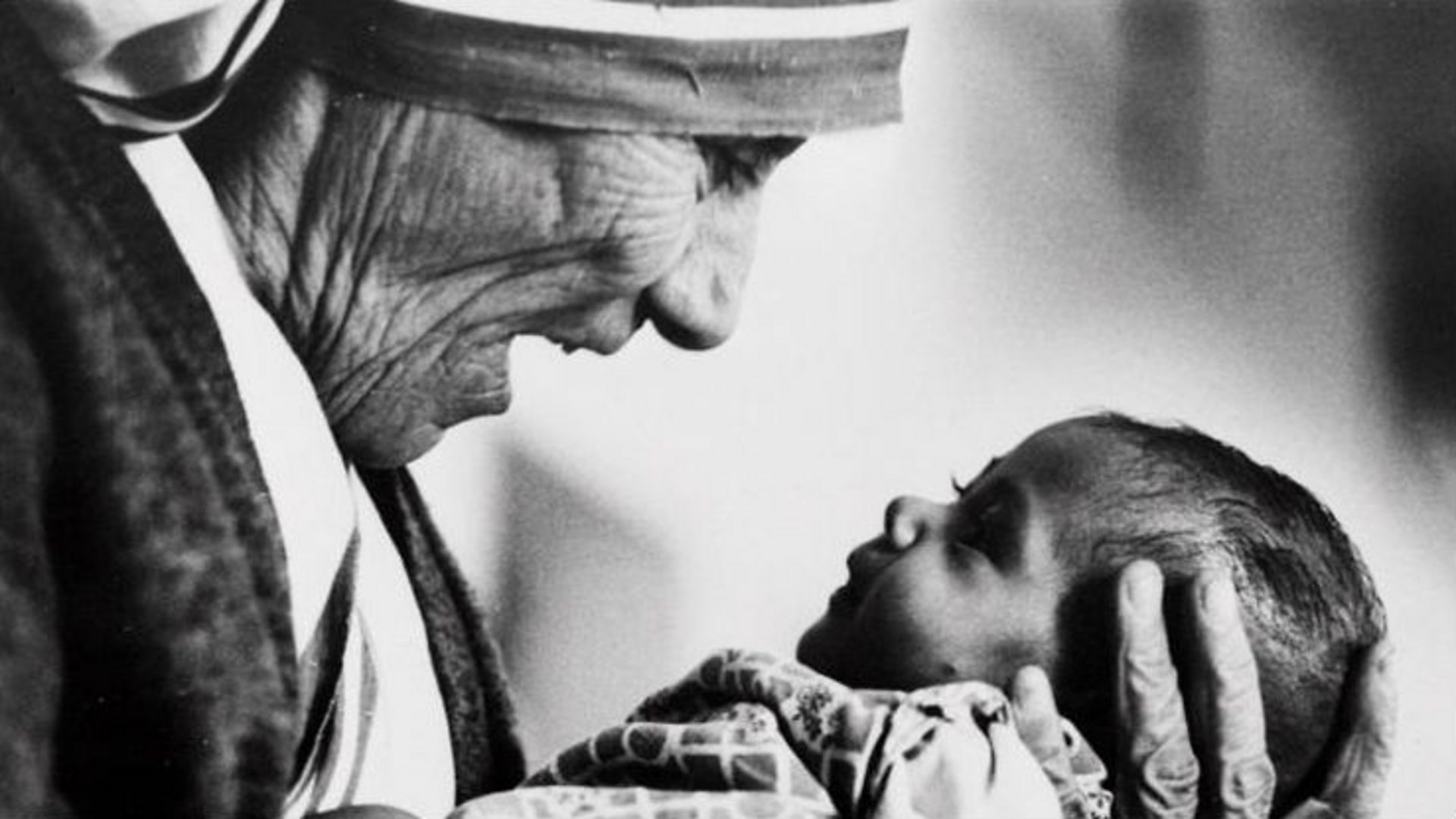
The Mission of Mother Theresa

My dear friend Becky Samuel Shah reflects on the mission of Mother Theresa, in which material and spiritual needs were inseparable.  Christianity Today features it on its homepage today.  Shah considers Mother Theresa, who is set to be canonized by the Catholic Church this coming Sunday, September 4, 2016, in light of Shah’s own research on the essential role of spiritual resources for escaping poverty.  Here is a passage:

On the surface, it might seem that Mother Teresa was solely preoccupied with the physical and material needs of the marginalized. She spent most of her life caring for the sick, feeding the hungry, and rescuing the homeless. Yet even as she set up institutions to resolve world hunger, she talked of people’s hunger for God and their inalienable value as creatures made in his image. Material needs, she insisted, can be easily satisfied, but caring for a person’s spiritual needs is more important. In fact, she regarded it as her primary calling.

Inspired by Mother Teresa’s example, I have worked in India for the last 10 years with Dalits, also known as “outcasts” or “untouchables.” As I’ve studied and served among them, I’ve come to realize the simple truth of her vision. The poor on the streets of “Kolkata” and places all over the world are deprived of basic human necessities like food, clothing, housing, and healthcare. (Most standard poverty measures assess wellbeing solely in terms of “neutral” social indicators, like calorific intake or years of schooling, and many development practitioners and scholars assume these are the only real aspects of poverty.) However, as Mother Teresa understood, poverty is not always reducible to material factors, and it often involves deprivation of dignity and self-worth.


Should Just War Be Abolished?

Last April, a conference took place in Rome, sponsored by Pax Christi, that called the Catholic Church to replace its traditional just war theory with a peace doctrine.  We covered it earlier in ArcU.  My colleague at Notre Dame and ArcU contributor, Gerard F. Powers, was interviewed on the conference by Our Sunday Visitor. Read here his case that the Church should not abolish the just war theory but rather ought to develop the “just peace,” or “peacebuilding” doctrine latent in its social teaching.

Then, Eli S. McCarthy of Georgetown University responds to Powers on behalf of the Rome conference, which he attended, calling for a more radical revision of the Church’s teaching in the direction of non-violence.  See here.


Religious Freedom, An American Export

It was a pleasure to review Anna Su’s book on religious freedom in American foreign policy, Exporting Freedom: Religious Liberty and American Power, for The Immanent Frame.  Su adopts a middle ground in recent debates.

The United States is unique among nations in claiming a heritage of religious freedom and a mission to spread it overseas.  This is difficult to dispute.  What has become hotly disputed is how this is to be regarded.

An “orthodox” view holds that the United States has played a special role—a providential part, as some would have it—in carrying a universal message of religious freedom to the world.  First, American colonies were havens for religious refugees; then the American founding was a milestone for constitutional norms of religious freedom; then, over the subsequent two centuries, the United States became a haven for religious people unwelcome elsewhere: Baptists, Mormons, Mennonites, Muslims, Amish, Catholics, Seventh-Day Adventists, Jews, Jehovah’s Witnesses, and others.

So convinced Americans have been of their ingenious experiment in religious liberty that they have sought to spread it overseas.  As Anna Su tells the story in her new book, Exporting Freedom: Religious Liberty and American Power, the U.S. extended religious freedom through its colonial occupation of the Philippines in the early twentieth century; its advocacy of the League of Nations after World War I; its efforts to shape international norms in the United Nations system and the Universal Declaration of Human Rights in the aftermath of the Second World War; its occupation of Japan after the same war; its formulation of a human rights policy in the 1970s; its International Religious Freedom Act (IRFA), passed by the U.S. Congress in 1998; and its occupation of Iraq after its war there in 2003.  In the orthodox view, all of these episodes were a straightforward promotion of American principles.

In recent years, this view has come to be challenged by a “revisionist” view held by scholars who, as Su puts it, “have begun to question the right’s claim to timelessness, universality and neutrality” (for my own review of this school, see here).  Led by political scientist Elizabeth Shakman Hurd, anthropologist Saba Mahmood, and legal scholar Peter Danchin, this school of critics holds that religious freedom and the view of religion on which it is based is not universal but rather particular to the West and its history of Reformation and Enlightenment.  Following the late French philosopher, Michel Foucault, they portray the United States’ promotion of these principles as little more than a neo-imperialist “project” that manifests American power.  Proponents of this view make up the lion’s share of statements in aforum hosted here at The Immanent Frame.

One can imagine a middle ground that eludes both the orthodox view’s idealism and the revisionist view’s reduction of religious freedom to power.  Call it “power plus purpose.”  In this view, the United States promotes religious freedom through its “preponderance of power,” to borrow the title of a prominent work in U.S. diplomatic history, and promotes religious freedom selectively according to the contours of this power, but does not promote religious freedom simply as a tool of its power.  It is broadly in this middle zone that Su’s “complementary . . . new vantage point” is located.

The book’s greatest value, though, in my view, is its tracing of the cause of religious freedom through the history of American foreign policy.  Recommended!

Fr. Hamel’s Martyrdom – Or Is It?

The recent killing of Fr. Jacques Hamel by two Muslim extremists has provoked a debate in Europe that has synthesized the question of Islam with the meaning of martyrdom.  New York Times columnist Ross Douthat considers the debate in his column of this morning.

He reports two dueling interpretations among Catholics.  Here is the conservative one:

To many conservative Catholics, Father Hamel is an archetypal Christian martyr — killed in a sacred space by men motivated by hatred of his faith, dying with the words, “Go away, Satan!” on his lips. To cultural conservatives more broadly, he’s a potent symbol of the jihadi threat to Europe’s peace.

But there is a different interpretation:

But within Catholicism there is also strong resistance to this interpretation. It starts at the very top, with Pope Francis, who has deliberately steered clear of the language of martyrdom — first describing the priest’s murder as “absurd,” and then using one of his in-flight press conferences to suggest that the killers were no more religiously-motivated than a random Catholic murderer in Italy.

 Meanwhile, amid calls of “Santo subito!” — “Sainthood now!” – two of the pope’s biographers, Austen Ivereigh and (in these pages) Paul Vallely, wrote essays warning against doing anything that might inflame interreligious tensions or otherwise play into the Islamic State’s bloodied hands.
In this narrative, which is also the narrative that many secular Europeans reached for, Father Hamel’s murder belongs not to the old iconography of a church militant under siege by unbelievers, but to the modern vision of a multicultural, multireligious society threatened primarily by ignorance and fear. So the appropriate response is to reassert the importance of religious tolerance, to highlight commonalities between French Muslims and their Catholic neighbors, to create a broad category of “peaceful religion” and cast jihadists outside it.

These interpretations, says Douthat, need not be mutually exclusive:

In theory, it should be possible (for a pope, especially!) to plainly call Father Hamel’s death a martyrdom while also rejecting sweeping narratives about Islamic violence or religious war.

Yet, Douthat ends up questioning the optimism of a certain post-Vatican II liberalism in whose eyes Fr. Hamel’s murder was never supposed to happen.