Prophecy, Polemic, and Pluralism: Léon Bloy and the Limits of Religious Tolerance

The following essay is authored by Miriam Shah, a masters student of Philosophy and Religion at the University of Chicago and an up-and-coming young writer (see her blog here.)

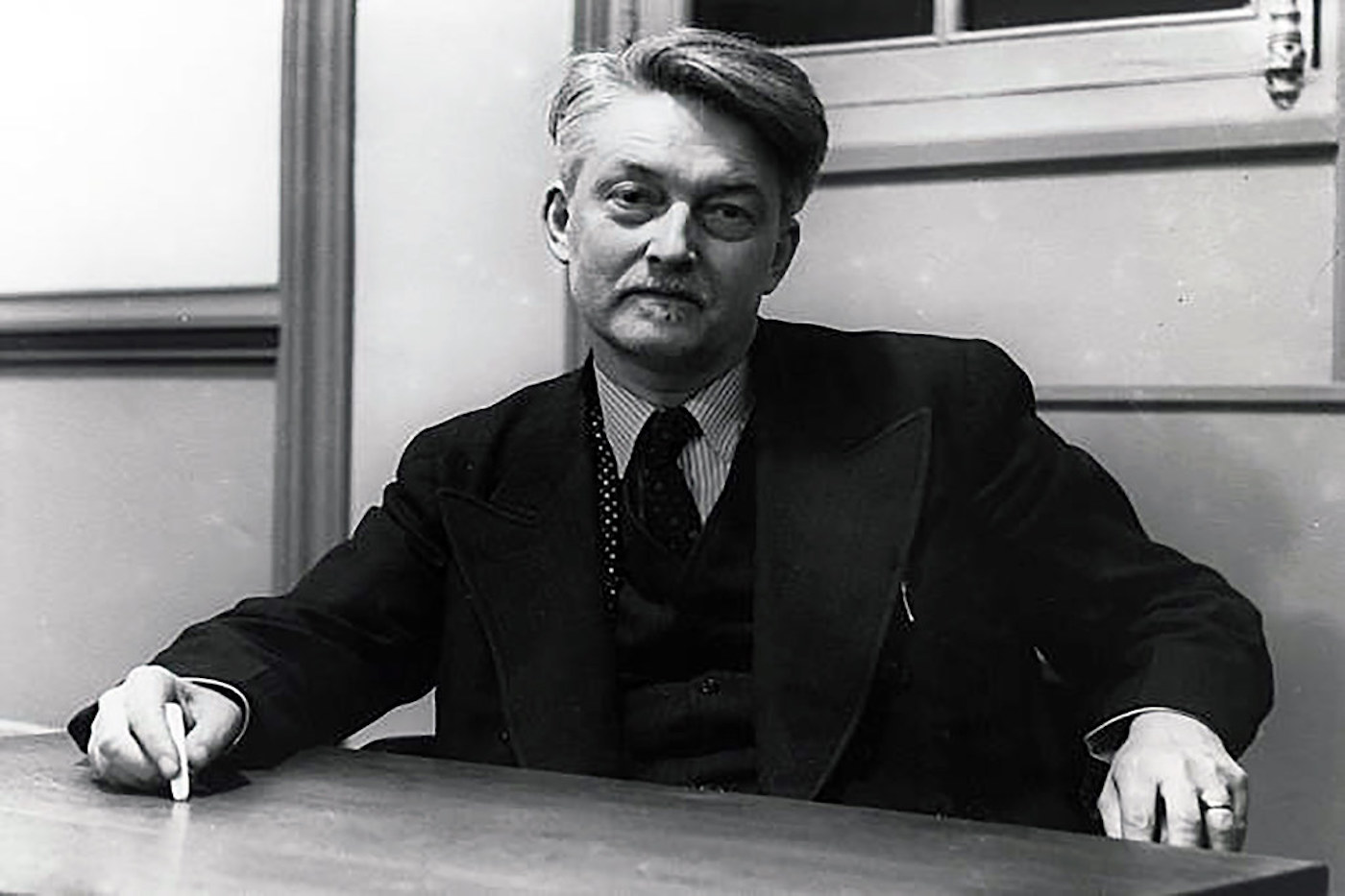
“My anger is the effervescence of my pity.” So wrote the late-nineteenth- and early-twentieth-century French writer Léon Bloy in a letter to his most famous disciple, Jacques Maritain.[i] Indeed, it was this anger that brought him both praise and repudiation throughout his career, which began in 1882, when he started writing for the journal of the notorious Le Chat Noir cabaret, and lasted until his death in 1917. Over the course of these thirty-five years, he wrote thirty books, both novels and works of nonfiction. He was also a dedicated correspondent and kept a private diary that was published posthumously. Though his output was prodigious, he is deemed by even his most devoted biographers and scholars to be rather unknown in his own time, especially in contrast to giants of the age such as Victor Hugo, Émile Zola, and Maurice Barrès. Despite being one of the more active Decadent writers, Bloy would almost certainly attribute this asymmetry in renown to injustice—the world of letters, in his mind, was corrupt. Taken over by the scourge of atheist humanism, French literature and culture were plummeting towards a pessimistic vision which Bloy considered antithetical to the Catholic belief in the transcendent origin, end, and value of the human person. This attitude led him to dedicate his life to writing what he believed to be “prophetic” works, suffused with vivid and vituperative language denouncing an ascendant secularism.[ii]

Despite his famous inclination to explosive anger and fierce polemicism, Bloy succeeded in attracting a small community of great minds around him who were nothing less than his disciples. Their encounters with the man and his works even prompted many of them to convert to the Catholic faith. These devotees stayed in close contact with Bloy until the end of his life, and the circle created a fertile environment in which more than a few Bloyens became great writers and philosophers in their own right.

This essay focuses particularly on the relationship between Bloy’s work and the so-called Jewish question. Next to his novels, he considered his work Le Salut par les Juifs to be his magnum opus, and his most celebrated followers, Jacques and Raïssa Maritain, converted largely because Bloy convinced them of the harmony between Christianity and Judaism.[iii] The Maritains counted Bloy among their most profound influences, and Jacques Maritain broke his vow of silence in his old age to defend the kind of simple, uncompromising, and anti-modernist faith he first learned from Bloy[iv] The legacy of Jacques Maritain, as well as his wife, who was always encouraging him, and a great inspiration to him, through her life and her outlook, is partly his commitment to religious pluralism.[v]

Bloy considered Le Salut par les Juifs to be the only book he would feel comfortable presenting to Christ. He declared that, “when one loves Le Salut, one is not only my friend, one is, by force, something more… this book… represents years of work, prayer and pain that have been, I believe, beyond measure.”[vi]

The title, Salux ex Judaeis est, is taken from the words of Jesus Christ in the fourth chapter of John’s gospel.[vii] The work has a fairly disordered structure, and is almost aphoristic, like many of Bloy’s works. Bloy considers himself to be writing in the quaestio argumentative style of St. Thomas Aquinas, and ultimately in the dialectical spirit of Socrates, in which he establishes a position through a systematic engagement with powerful objections as opposed to mere straw men.

In the beginning, Bloy skewers Edward Drumont, saying that he was obsessed merely with money, and that he failed to understand that “our Lord himself was a Jew par excellence.”[viii] Bloy then characterizes antisemitism as “blasphemy,” because of the common divine heritage between Christians and Jews, and he likens blaspheming Judaism to criticizing one’s parents with all their shortcomings. “Antisemitism is the most bloody and the most unforgivable,” he declares, which suggests that he certainly did not see himself as antisemitic.[ix]

However, Bloy then appears to contradict his staunch opposition to antisemitism, writing, “I must be little suspected of tender love for present day descendants [of the Jewish people].”[x] Bloy goes on to say, “Finding myself in Hamburg that year, I had.. the curiosity of visiting the Jewish market..the surprising abjection of that emporium of emphyleutic detritus is difficult to express..obsequious wails assaulted me..servile faces with the same redoubtable look.”[xi] Bloy then tries to temper this, declaring that Jews must be respected as instruments of the Redemption: “They were forced..supernaturally forced, by God to perform abominable and disgusting acts, which they need to do in order to accredit their dishonor as instruments of the Redemption.”[xii]Essentially, he writes Jews are flawed, but they have to be. Just like Pontius Pilate the Roman had to be wretched, and King Saul had to be weak, and the Virgin Mary had to be without sin. Love for the Jews, in other words, must be a matter of theologically grounded filial obligation, not a matter of empirically rooted sentiment.

Precisely because he believed he was prosecuting a theoretical line of argument, dialectically rather than sentimentally, Bloy believed he was simply putting forward the facts, without anger, and without rage: “Sympathy for the Jews is a sign of turpitude, that’s well understood. It is impossible to merit the esteem of a dog if one lacks the instinctive disgust of the Synagogue. That is expressed calmly, like an axiom of rectilinear geometry, without irony and without bitterness.”[xiii] Raïssa Maritain was particularly aggrieved by this, and she writes in her work, Les Grandes Amitiés, that statements like these were “grosses taches noires,” though she believed Bloy to be writing “without bitterness,” employing invective as a rhetorical and pedagogical tool. She argues that Bloy did not intend to be contemptuous when he said that Jews were “destined to suffer,” as he was deeply marked by the Pauline view that suffering can not only redeem sin, but be a sign of “election.”[xiv] In a French cultural climate that was increasingly and pervasively anti-Semitic, especially on the Right, perhaps Bloy was trying to go out of his way to emphasize that his view of the Jews was not based on emotional special pleading on their behalf. Like everything else for Bloy, his view of their status was strictly a function of their typological significance in his biblical conception of history.

Bloy ends with a paradox: “The Jews will not convert until Jesus descends from the cross, and Jesus cannot descend before the Jews convert,” suggesting the urgency of conversion, if one wanted to bring about the Second Coming.[xv]

Bloy later asks Jewish friends of his mentor, Barbey D’Aurevilly, the Hayems, for money, as well as asking them if they could facilitate his sponsorship by the Rothschilds. Perhaps he wanted these Jews to contribute to the long, great project of conversion, which he viewed simply as their inevitable destiny. They were people whom, in his eyes, ought to be converted, and maybe he thought their involvement in his oeuvre would secure their redemption.

Despite these “grosses tâches noires” described by Raïssa Maritain, Bloy’s influence on Nostra Aetate, the “Declaration on the Relation of the Church with Non-Christian Religions of the Second Vatican Council,” is considered by some scholars to be significant.  Nostra Aetate was revolutionary because it was an official Church document that attempted to emphasize the relationship and “shared covenant” between Jews and Christians, and repudiates the problematic charge of “deicide” against Jews.[xvi] Scholars John Connelly and Richard Francis Crane both assert that “the path to Vatican II” begins with Léon Bloy’s work Le Salut par les Juifs. Connelly’s  From Enemy to Brother, and Crane’s “The French Roots of Nostra Aetate,” both argue that the foundation for Nostra Aetate was built in Paris during the first two decades of the twentieth century with Le Salut par les Juifs, which they write was revolutionary in its assertion of a Judeo-Christian brotherhood, united in mystical suffering and a shared covenant, and that Jews paved the way for the redemption of mankind.[xvii] Connelly discusses how John Osterreicher,  the man who drafted Nostra Aetate and a friend of Jacques Maritain’s, read and was inspired by Bloy’s Salut.[xviii]

On the other hand, Salut par les Juifs was censored for antisemitism as recently as 2013 by a judiciary tribunal in France. How can a person who has been censored for antisemitism have had a salutary effect on religious pluralism, as manifested in Nostra Aetate?

Romain Vaisserman, in the preface to the essay collection, “Quatre écrivains Catholiques sur la Question Juive de Bloy à Maritain,” asserts that Bloy’s writings on the Jewish question were “either detestable or sublime” (“soit détestables, soit sublimes”),  and that ultimately his work was so full of contradictions it was impossible to truly uphold it as either anti- or philosemitic.[xix]

Scholar Henri Quantin is somewhat sympathetic but more critical, in his essay “Du fumier sur le figuier: Léon Bloy et les Juifs, ” he quotes Chateaubriand, who he considers a forerunner to Bloy: “The Jewish people are a symbolic encapsulation of the human race.” (“Le peuple juif est un abregé symbolique de la race humaine).”[xx] Même quand Bloy attaque la médiocrité ou la bêtise des Juifs, celle des Catholiques n’est jamais loin..”[xxi] Quantin acknowledges Bloy’s status as a product of his time, though he also makes the compelling point that Bloy could not be classed in the same category as Drumont, as “Bloy’s perspective is never political; it is always religious or theological. Bloy speaks of the Jews only in relation to Jesus, he speaks of Israel only in the perspective of the Salvation offered by Christ.” [xxii]

He highlights that Bloy writes in 1911, almost twenty years after publishing Le Salut, that he felt that the caricatures of Jews in his novels, the character Nathan in Le Desespéré, and Katz in La Femme Pauvre, were ‘youthful errors’. He feels this way, perhaps because of the Maritains and their friendship, and his growing affection for Raïssa Maritain. Quantin also quotes Bernard Lazare, considered to be the first Dreyfusard, who actually considered Bloy a philosemite, because he recognized the Jews as fit for a great destiny, rather than unfit for any destiny.

However, scholar C.A. Tsakiridou points out that though Bloy was better than most, including Maritain’s friend Charles Péguy, he is certainly not immune to criticism. C.A. Tsarkiridou claims that Maritain was unable to “see Bloy’s spirituality for what it really was,” describing Bloy as a “narcissist.”[xxiii] It is likely that many contemporary readers of Le Salut will share Tsakiridou’s dismissal of Bloy, as ultimately, Le Salut par les Juifs has not really stood the test of time, as the “grosses taches noires” make it difficult to appreciate Bloy’s finer and more insightful points, such as those that concern the shared Divine heritage of Christians and Jews. The unorthodoxy of Bloy’s education meant that he occasionally lacked the deftness and nuance of Sorbonne-trained Maritain, prone as he was, at times, to slip into the broad strokes and generalizations of a neophyte. Furthermore, excoriating, periphrastic pamphlets are not the best example of works where one can “take intention for fact,” without the extensive broader context of the author’s personality and confidence in their good will.

While there is evidence that Le Salut paved the way for more pluralist works like Nostra Aetate, its chief value now is its status as a milestone on the path to improving relations between Christians and Jews. One could argue that, in a flawed way, Bloy offered Maritain the idea that the Catholic mind saw Jews in a positive light, given that Jews and Christians both share in the covenant of God first given to the Jews. It is also important to recall that Maritain converted only after Bloy convinced him that Catholics viewed the Jews favorably. Maritain would go on to become ambassador to the Holy See, and appeal to the papal undersecretary Monsignor Montini, who re-convened Vatican II, to condemn antisemitism. [xxiv] Nearer to the end of his life, Maritain wrote, in a letter to French-Algerian-Israeli scholar André Chouraqui: “In waiting for [reconciliation] what is required above all is the development of an ever closer friendship. I do not mean true friendship, but truly fraternal and truly effective friendship.” [xxv]

Despite his paradoxical legacy, Bloy played a large role in the creation of a new spiritual community in the spirit of the Renewal through his reconciliation of the contemplative essence of the monastic ideal with the dialectical and argumentative nature of the Socratic forum. Many of those things are most repellent about Bloy, including his searing honesty, are the exact things that were crucial to his role as a prophet. His intensity of feeling, as well as his willingness to engage with both the sacred and profane, provided a solid foundation for an engaged Catholic tradition, attracting people who were actually interested in “being in the world,” and amending its social ills. Through utter devotion to his prophetic calling, he showed that belief in the need for solitude with God does not necessitate that one removes oneself from the world, rather, that the world is the very arena in which the struggles of the spirit must take place. In this way, he moved scholars such as Jacques Maritain to take on the mantle of a spiritually informed political involvement.


[i] Jacques Maritain, Quelques Pages sur Léon Bloy (Paris, Rue de Fleurus: Cahiers de la Quinzaine, N.D.), p. 16. “Ma colère est l’effervescence de ma pitié” **Unless otherwise noted, all translations are my own.**

[ii] Romain Deblue, “Léon Bloy ou L’Histoire au Miroir,” in Samuel Lair and Benoît Mérand, eds., Léon Bloy dans L’Histoire (Paris: Classiques Garnier, 2021), p. 52.

[iii] Joseph Anthony Amato, A French Catholic Understanding of the Modern World (Ypsilanti, MI: Sapientia Press, 2002).

[iv] Jean-Luc Barré, Jacques and Raïssa Maritain: Beggars for Heaven, translated by Bernard E. Doering (University of Notre Dame Press, 2002).

[v] John Connelly. From Enemy to Brother: The Revolution in Catholic Teaching on the Jews, 1933-1965 (Cambridge, MA and London, England: Harvard University Press, 2012).

[vi] Raïssa Maritain, Les Grandes Amitiés, p. 308: “Quand on aime Le Salut, on n’est pas seulement mon ami, on est, par force, quelque chose de plus.. ce livre.. représente des années de travaux, de prières et de douleurs qui ont été, je crois, hors de mesure.”

[vii] John 4: 22.

[viii] Léon Bloy, “Le Salut par les Juifs” in Maxence Caron, ed., Léon Bloy Essais et Pamphlets (Éditions Robert Laffont, 2017), p. 972: “Le Juif par excellence de nature”.

[ix] Ibid, p. 987: “L’antisemitisme est le plus sanglant est le plus impardonnable.”

[x] Ibid, p. 973: “Je dois être peu soupçonnable d’amour tendre pour les descendants actuels de cette race fameuse.”

[xi] Ibid, p. 973; “Me trouvant à Hambourg, l’an passé, j’eus la curiosité de voir le Marché des Juifs. La surprenante abjection de cet emporium de détritus emphyteotiques est difficilement exprimable… les hurlements obséquieux m’accrochaient…toutes ces faces de lucre et de servitude avaient la même estampille redoutable”

[xii] Ibid, p. 979: “Ils sont forcés par Dieu, invinciblement et surnaturellement forcés, d’accomplir les abominables cochonneries dont ils ont besoin pour accréditer leur déshonneur d’instruments de la Rédemption.”

[xiii] Ibid, p. 980: “​​La sympathie pour les Juifs est un signe de turpitude, c’est bien entendu. Il est impossible de mériter l’estime d’un chien quand on n’a pas le dégoût instinctif de la Synagogue. Cela s’énonce tranquillement comme un axiome de géométrie rectiligne, sans ironie et sans amertume.”

[xiv] Raïssa Maritain, Les Grandes Amitiés, p. 117.

[xv] Léon Bloy, “Le Salut par les Juifs,” p. 995: “Les Juifs ne se convertiront que lorsque Jésus sera descendu de sa Croix, et précisément Jésus ne peut en descendre que lorsque les Juifs se seront convertis.”

[xvi] “Cum igitur adeo magnum sit patrimonium spirituale Christianis et Iudaeis commune, Sacra haec Synodus mutuam utriusque cognitionem et aestimationem, quae praesertim studiis biblicis et theologicis atque fraternis colloquiis obtinetur, fovere vult et commendare”. Paul VI. “Nostra Aetate.” Vatican Archive, https://www.vatican.va/archive/hist_councils/ii_vatican_council/documents/vat-ii_decl_19651028_nostra-aetate_en.html.

[xvii] Connelly. From Enemy to Brother, p. 109; Crane, “Cracks in the Theology of Contempt: The French Roots of Nostra Aetate,” p. 11.

[xviii] Connelly. From Enemy to Brother, p. 132. Yes, it is true that many people inspired Vatican II, but the combination of Osterreicher’s friendship with Maritain and inspiration from Bloy as expressed by Connelly strongly suggests that Bloy had a non-negligible effect.

[xix]  Romain Vaissermann and Julianne Unterberger, Quatre écrivains Catholiques Sur La Question Juive De Bloy À Maritain (Reims: Collection Histoire des Religions, 2017),  p. 8.

[xx] Henri Quantin, “Du Fumier sur le figuier: Léon Bloy et les Juifs” in Quatre écrivains Catholiques Sur La Question Juive De Bloy À Maritain (Reims: Collection Histoire des Religions, 2017), p. 11.

[xxi] Ibid, p. 19.

[xxii] “.. tout de suite que la perspective de Bloy n’est jamais politique; elle est toujours religieuse ou théologique. Bloy ne parle des Juifs que par rapport a Jésus, il ne parle d’Israel que dans la perspective du Salut offert par Christ.” Ibid, p. 21.

[xxiii] Tsakiridou, p. 210.

[xxiv] Crane, “Cracks in the Theology of Contempt: The French Roots of Nostra Aetate,” pp. 11-13.

[xxv] Ibid, p. 20 “En attendant [reconciliation] ce qui est exigé de toute nécessité, c’est le développement d’une amitié de plus en plus étroit. Je ne dis pas amitié vraie, mais vraiment fraternelle et vraiment efficace.”
On Christian Justice and Its Potential to Renew Our Political Order

On October 9, 2025, I delivered the Catholic Political Thought Lecture at the Catholic University of America. It is based on my book manuscript tentatively titled, Resurrecting Justice. I argue that the dominant concept of justice, the will to render another his due, synonymous with rights, has overswept the Biblical concept of justice, which means comprehensive right relationship. And I make the case that the Biblical conception has the potential to renew our divided political order. I zero in on race and life.

Resurrecting Justice – A Lecture on October 9 in Washington D.C.

On October 9th, 5:00 pm, at the Catholic University of America, I will be giving this lecture on the Christian meaning of justice, how it differs from the dominant concept of justice, the will to render another his due, and how Christian justice can contribute our national public life. One of the themes is that forgiveness is an element of justice, a teaching that Pope Leo XIV just offered this past Sunday, September 21st. That same day, Erika Kirk, wife of slain activist Charlie Kirk, publicly forgave her husband’s killer. These events inspired me just as I was finishing up the draft of the lecture. I would be delighted to see you at CUA if you are in a position to attend.

Natural Law Defended Anew

On April 8, 2025, I participated in a symposium on Melissa Moschella’s new book, Ethics, Politics, and Natural Law: Principles for Human Flourishing (University of Notre Dame Press), sponsored by the McGrath Institute for Church Life.

Here are my remarks:

My enthusiasm for Melissa Moschella’s new book originates in common experience, as I learned from her introduction. She writes of being a freshman at Harvard University and taking Ethics and International Relations with Professors Stanley Hoffman and Bryan Hehir.

I know this well. Both of these fine professors – Hehir also a legendary priest in the Archdiocese of Boston – were my doctoral dissertation advisers when I was a graduate student in political science at Harvard from 1989 and 1996 (only slightly before Melissa arrived) and I served as a teaching fellow for Ethics and International Relations. I recall the enormously long reading list that Melissa mentions. Hoffmann sported a theory that students would complete only, say, 30% of the reading no matter how long the reading list – and so crafted very long syllabi.

I recall, too, what Melissa recounts, that the two leading approaches to ethics were deontological ethics, whose standard bearer was Immanuel Kant, and utilitarianism, the legacy of Jeremy Bentham and John Stuart Mill. The syllabus reflected the pages of philosophy journals, which were dominated then by these oscillating and dueling schools.

Melissa’s reaction to this vivifies her tenacity and intellectual integrity. She was unsatisfied with the going alternatives, knew enough to be unsatisfied, and would settle her quest on Aristotle and Thomas Aquinas, whom she studied at the Pontifical University of the Holy Cross in Rome. It was there that she came across the ideas of the New Natural Law Theory (NNL), an ethics that is rooted in Aristotle and Aquinas and builds on their insights in fresh ways, much like a tree growing new shoots that give it new form, a new look. Yet she accepted the views of NNL common among skeptical Catholic philosophers.

It was Professor Robert George, her doctoral adviser at Princeton, where she studied political philosophy, who invited her to annual small gatherings of the leading NNL scholars, where she posed her toughest questions – and received answers. Here again lies testimony to Melissa’s intellectual virtue – that she would open her mind and her heart to a view of which she had been dubious.

Here, our stories intersect again. I first came across NNL in graduate school when one of its leading scholars, Oxford professor John Finnis, visited Harvard, spoke, and met with a small group of graduate students. I began gradually to read the NNL scholars. I was not able then to confidently sort out their views from, say, those of Kant, or to answer the prominent challenging criticisms of NNL. But in recent years, I was also invited to the gatherings and so to read the writings of this school in much greater depth.

To study with the NNL scholars is to be received into a rare fellowship, where one may search for the truth in honesty and in friendship. The school was given its name – the new natural law theory – by political philosopher Russell Hittinger, one of their earliest critics, who graciously and wryly writes the introduction to Melissa’s book.

The NNL school is also rare in the world of moral philosophy for its degree of scholarly collaboration around a single theory. I know of nothing that resembles this focused intellectual teamwork except perhaps for that around the work of the liberal philosopher John Rawls. NNL is now in its third generation, its paterfamilias being the philosopher, Germain Grisez, whose launching of the theory we may place retrospectively in 1965, and is now carried on by several talented young scholars, including Melissa, Sherif Girgis, my colleague in Notre Dame’s Law School, and Ryan Anderson, now President of the Ethics and Public Policy Center. Manifesting the ability of this theory to deliver determinate ethical answers, as well as the integrity, sense of service, and commitment to the teaching of the Catholic Church of these scholars, is their constant efforts to speak publicly about the issues of the day, including the most controversial of them. Finnis, George, Anderson, Girgis, and Notre Dame Law Professor Gerard Bradley have defended marriage and traditional teachings on sexuality in a time of rapid and colossal revision; Finnis, Grisez, and philosopher Joseph Boyle have argued against the morality of nuclear deterrence; philosopher Christopher Tollefsen has written on lying, the atomic bomb, and many other issues; many other NNL scholars, (including, at greatest length, philosopher Christian Brugger), have opposed the death penalty; Melissa has written on parental rights; and others have written on many other issues.

Now, Melissa’s new book performs three major tasks that, when combined, make it a rarity in moral philosophy.

First, it is an introduction to a school of thought: NNL theory. Sixty years on, the school has lacked and badly needed this. Grisez’s core statement of the theory exists in three volumes that amount to over 2000 pages. Monographs and articles abound, which Melissa helpfully catalogues in the annotated bibliography at the end of the book. But hers is the first succinct exposition of the entire core of the theory, its chapters unfolding through the basic human goods, the moral principles, the theory’s account of community, its political thought and its manifestation of God, all in a form that is accessible to first-time students and readers. Like an astounding outfield catch, this feat looks easy when it is done well and disguises the virtuosity and training that made it possible.

Second, the book takes on controversies about NNL among scholars. There are many of these – itself a tribute to the influence and prominence of the theory. It is too much Kant. Not enough Aquinas. It is not grounded in human nature. Not grounded in metaphysics. It promotes goods that are free floating, abstract and not part and parcel of human flourishing. It is too rationalistic. It leaves out the virtues. It is too individualistic and gives short shrift to human ties and community. It does not make religion rightly superior. Its common good is too thin. It is opposed to what Alastair MacIntyre argues. Or what Servais Pinckaers argues. Melissa manages to engage virtually all of these controversies and to do so gently on the first-time reader through clear descriptions in the text and through sending the argument to footnotes when it gets technical. She also engages her critics charitably and carefully, always seeking common ground where it is to be found – as she does with MacIntyre’s thought, for instance. Balancing this second task with the first is an even rarer feat.

It is rarer still to accomplish a third dimension, which is to offer original philosophical arguments and interpretations – ever new shoots on the NNL tree. This is a go-to book but is not merely a briefer restatement (to borrow John Rawls’s title). In several ways, Melissa developed dimensions of NNL that made it all the more compelling to me.

In the first few pages, she brings forth and develops MacIntyre’s insight that a good ethical theory combines principles, goods, and virtues. These are three legs of a stool that collapses when one is absent. Melissa shows how each is important, how some philosophers stress one to the detriment of others, and how the NNL theory synthesizes the three. Here Melissa makes the simple but profound argument that the NNL theory is eudaimonistic, centered on an account of human happiness, flourishing and fulfillment – an insight that alone recasts the theory in light of common criticisms.

Melissa’s development of the Vocational Principle; her argument for the meaning of the common good; for the difference between the political common good and a society’s entire common good; for limited government; that political authority is mostly but not totally instrumental; her treatment of the virtues; her explanation that the good of religion is ultimate in one sense yet remains incommensurable with other goods; her account of the good of the family and other associations (drawing on her previous work); her argument for partial commitments – that is, of why we have greater obligations to those proximate to us while retaining some obligations to those far from us; and her treatment of other matters are all original and compelling.

On page three, Melissa makes a big statement, “I have slowly become convinced that the NNL theory provides the best account of ethics that has been developed up to this point, and that it offers a rigorous and satisfying alternative to deontology and consequentialism, largely resolving the question I have had since I first began studying moral philosophy during my freshman year of college.”

This piece was slightly updated on April 11, 2025.

A Little Noticed Major Victory For Life

A Roe v. Wade for Latin America was averted and the right to life upheld. This is what took place late last month in the ruling of the Inter-American Court of Human Rights (IACHR) in Beatriz vs. El Salvador. But headlines obscured this victory for life and portrayed the ruling as a milestone in the quest for abortion rights in Latin America and around the world (see here and here).

(See this earlier post with a video of the testimony of Paolo Carozza of Notre Dame Law School, whom the court called as an expert witness in the case.)

Why was Beatriz a victory for life?

Beatriz, an impoverished 22 year-old woman in El Salvador, gave birth in 2013 to a baby that had been diagnosed with anencephaly, a rare brain disorder, and the baby died not long after birth, as is sadly typical in such cases. Beatriz recovered from the birth without complications but was killed four years later in a motorcycle accident.

Abortion advocacy groups then decided to bring a suit against El Salvador’s government in hopes of eliciting a major ruling against the country’s laws prohibiting abortion. Beatriz’s death, they claimed, had resulted from her not enjoying a “human right to abortion.” After they lost their case before El Salvador’s Supreme Court, they brought the case before the IACHR, hoping further that this regional court would establish a right to abortion for all of Latin America.

Such a ruling – a Roe v. Wade for Latin America – would have defied some of the world’s strongest legal protections of the right to life. The American Convention on Human Rights – now ratified by 24 of the members of the Organization of American States – declares that the right to life shall be protected in law from the moment of conception, one of the strongest statements of the right to life in international law. El Salvador’s laws protecting life are some of the strongest such laws within states and are often the target of abortion rights advocates.

On December 20, 2024 the IACHR ruled in favor of the plaintiffs but in a highly narrow sense, requiring El Salvador to adopt more flexible medical protocols in high-risk pregnancies and to pay $40,000 to pro-abortion groups. Far more significant is what the court refrained from: declaring that abortion is a right. It did not even require exceptions for abortion or that abortion be decriminalized in any way in the laws of countries. It did not accept the plaintiffs’ argument that “obstetric violence” warrants abortion nor that Beatriz’s pregnancy and birth had contributed to her death. The ruling leaves intact the protection of the right to life in the American Convention and in El Salvador’s laws.

The decision merits far more notice. While in the United States attention focuses forcefully on domestic abortion politics, the contest is intense around the world. Much is at stake. The taking of unborn life is the largest global violation of human rights. Conservative estimates place numbers at around 12 million per year while other estimates claim 60 to 70 million per year. The advocacy of the right to abortion is aggressive in Latin America and Africa, where abortion is still widely prohibited, and finds its favorite forum in international law and international organizations. It has won major successes in Mexico, Argentina, and Colombia in recent years. In this global contest, the Beatriz decision is a major victory for the cause of life.

On Donald Trump’s “Go to Hell” Theology

“Go to hell,” our President-elect, Donald Trump, wrote on Truth Social to the death row prisoners whose sentences President Biden recently commuted. Trump wrote this on Christmas Day. Christians, who have been arguing about Trump since his campaign of 2016, have received a new expression of his theology.

Pope St. John Paul II became the first pope to call for the abolition of the death penalty in his encyclical, Evangelium Vitae, or The Gospel of Life, published on the Feast of the Annunciation, March 25, 1995. The practice was not compatible with human dignity, which not even a murderer loses, he taught. When I went to see John Paul II speak on his trip to St. Louis in 1999, I recall, he publicly called for the Governor of Missouri to commute the sentence of a prisoner about to be executed. The governor complied. Pope Francis has repeated the Church’s opposition to the death penalty and prayed publicly on December 8, the Feast of the Immaculate Conception, that Biden commute the sentences of federal death row prisoners. Biden commuted 37 sentences on December 23.

John Paul II’s response to capital crime extended further after he became the victim of such a crime. After he recovered from being shot by Turkish assassin, Mehmet Ali Agca in St. Peter’s Square on May 13, 1981, John Paul II visited Agca in prison and forgave him. This took place on December 27, 1983, just after Christmas. In 2014, Agca laid white roses on John Paul II’s tomb.

The central and founding event of Christianity is Jesus Christ’s forgiveness of humanity’s sins on the Cross and his meriting grace for humanity’s renewal in his Resurrection. Under the terms of the New Covenant, any person who accepts God’s forgiveness through repentance, baptism, and keeping the commandments may live in friendship with Christ eternally. Jesus’ love for the sinner does not exempt murderers but is rather especially intense for them. He has posted the message on his World Wide Web, “go to heaven.”

Jesus extends his love on the Cross equally in solidarity to families of murder victims. The brilliance of the 1995 film, Dead Man Walking, is that it challenges every viewer’s stance on the death penalty, deftly tugging our emotions towards everyone involved, not to leave us confused but rather to cultivate our hearts’ solidarity with victims, prisoner, and everyone involved. The lead role is that of Sister Helen Prejean, an activist against the death penalty who undertakes to accompany the prisoner, Matthew Poncelot, as he unsuccessfully appeals his sentence and then faces execution in a Louisiana prison. Her arduous task becomes ever more difficult when she encounters the parents of the victims, two high school students whom Poncelot murdered on their prom night, who angrily demand of Sister Helen, What about us? At the end of the film, following Poncelot’s execution, one of the victim’s fathers, Earl Delacroix, whose name means “of the Cross,” unexpectedly shows up at Poncelot’s funeral and tells Sr. Helen, “I don’t know why I am here. I got a lot of hate.” In the closing scene, he is shown praying in a chapel with Sr. Helen, which I think we are to interpret as his prayer for the strength to forgive.

About the Church’s teaching on the justice of the death penalty, much more must be said. If one accepts the New Covenant, though, ought not one to participate in this covenant and at least pray for the redemption of prisoners on death row? Our President-elect appears to think not.

Sign Statement Against Academic Boycotts!

Greetings, I am pleased to support this petition against academic boycotts. I enclose the text of the petition’s statement and encourage you to read it and consider signing.

I am grateful for the efforts of three colleagues in political science to organize the petition:

Ronald Krebs, Distinguished McKnight University Professor, Department of Political Science, University of Minnesota

Cary Nelson, Jubilee Professor of Arts & Sciences Emeritus, English Department, University of Illinois Urbana-Champaign

Ron Hassner, Professor, Political Science, U.C. Berkeley

The text, authored by these colleagues, I reprint, beginning here:

Against Academic Boycotts

To sign the statement, click here.

On Friday, August 9, 2024, the American Association of University Professors, which has long eloquently defended the core principle of academic freedom, reversed course and declared academic boycotts legitimate.

We believe the AAUP’s new position is wrong-headed and dangerous. We cannot safeguard academic freedom by violating academic freedom. Normalizing academic boycotts poses a profound threat to academic freedom.

Academic freedom is always fragile. We do not defend the academic freedom only of those with whom we agree, but of those—and especially of those—whose views we find odious. The AAUP eloquently asserted the right to academic freedom in its 1915 founding document, and it eloquently asserted that right again in 1940, a moment in US history when US universities were hardly bastions of freedom and when the gates of free expression were, under the pressures of war, swinging shut. The AAUP’s clarion call did not immediately become the norm, and the right to academic freedom was, in the first two decades of the Cold War, observed more in the breachIndeed, the AAUP itself failed the test of McCarthyism. It has now failed the test posed by the ongoing war in Gaza.

In 2005, the AAUP approved a statement condemning academic boycotts absolutely and unconditionally: “We reject proposals that curtail the freedom of teachers and researchers to engage in work with academic colleagues, and we reaffirm the paramount importance of the freest possible international movement of scholars and ideas.” A year later, a committee of distinguished scholars elaborated and defended the association’s stance. Despite significant debate in the two decades since then, the AAUP has maintained that position. The AAUP was right then—and it is wrong now.

Academic boycotts must be opposed, in principle, for two reasons.

1.         Academic boycotts are in deep tension with the basic animating spirit and values of the academy. Scholarly progress depends on the free exchange of ideas, and this in turn requires the free movement of people and cultivation of relationships among universities wherever they may be located. The only relevant measure of value lies in the substantive contribution of the scholarship itself—not the place where its authors reside or are employed. Scholarly knowledge cannot progress if scholars’ voices are silenced for reasons of politics, whether the political entanglements of their institutions or their national government or even the political views of the individuals themselves. The AAUP expert committee argued in 2006, “the search for truth and its free expression suffer if a boycott is in place… the need is always for more academic freedom, not less.” We cannot save academic freedom by endorsing and implementing boycotts that violate academic freedom.

2.         Academic boycotts punish individual scholars for the alleged misbehavior of their government and/or of their academic institutions. This is a material fact based on the structure of the modern university. They should not be judged complicit in policies which they had no role in formulating. To punish these scholars for the misdeeds of others is to engage in unwarranted collective punishment.

We are troubled by reports of violations of academic freedom on college and university campuses around the world. If individual scholars could lose their right to academic freedom because their institutions ran roughshod over others’ rights to the same, very few around the world would enjoy the right to academic freedom. Academics in China, Russia, Turkey, the Arab world, Singapore, and many other places should then be subject to boycott. And don’t forget the United States: academic freedom in the United States is under assault today from both the right and the left. If universities need to be free of sin for their scholars to deserve academic freedom, there would be no academic freedom at all.

Defenders of boycotts, including the AAUP in its latest statement, sometimes seek to distinguish between institutions and their members, asserting that they call for boycott only of the former. But this is a distinction without a difference. There is no way to boycott an institution without undermining scholarly exchange, joint research programs, and instructional collaborations and thereby violating individuals’ academic freedom. As the AAUP rightly observed nearly 20 years ago, “The form that noncooperation with an academic institution takes inevitably involves a refusal to engage in academic discourse with teachers and researchers, not all of whom are complicit in the policies that are being protested”—and the vast majority of whom are certainly not responsible for those policies.

Academic freedom is an inviolable right to which all scholars must be entitled regardless of whether they perfectly uphold that right for others. That extends as well to our colleagues who, in a sincere commitment to use whatever tools are at their disposal to effect political change, endorse academic boycotts and thereby violate academic freedom. Faculty members and students should not face institutional or governmental censorship or discipline for endorsing academic boycotts, though participating in boycotts should be seen as a violation of professional norms.

The only circumstance under which we might (and, even then, only might) see a boycott as justifiable is if academic freedom were so restricted that the academy had become simply, and nothing more than, a mouthpiece of government. In such a circumstance, academics have lost their right to freedom because they have become mere apparatchiks. However, if academic freedom were that severely compromised in a country, then a comprehensive economic boycott would be in order, not a targeted boycott of universities.

The AAUP does not speak for us. We call on our fellow scholars to join us in opposing boycotts of fellow scholars wherever they might reside and be employed.

To sign the statement, click here.

What Are We Teaching Our Students?

This question titles a piece that I just published in The Irish Rover that begins:

Days after Hamas’s October 7, 2023 attacks on Israel—killing over 1200 men, women and children, beheading babies, murdering the elderly, killing more Jews in any day since the Holocaust—hundreds of students at our nation’s most prestigious universities protested … Israel.

What are these students being taught such that they would condone Hamas’s attacks? What they are not being taught is the natural law, I argue — the moral law that structures the universe and forms of the backbone of the United Nations Charter and the proscription of war crimes in international law. The student’s protests undercut the validity of these cherished and fragile international norms.

Catholic universities are in a strong position to teach the natural law and contribute to the nation and the international community, I go on to argue . . .

Human Rights Need Religion

Last month, on December 14, 2023, I attended a remarkable meeting of religious leaders from around the world in Princeton University to commemorate the 75th anniversary of the Universal Declaration of Human Rights. Common today is the view that religion is an enemy of human rights. The conference, though, recalled the remarkable consensus of world religious leaders that made the adoption of the UDHR possible in 1948, a story that Harvard Emeritus Professor Mary Ann Glendon has told in her book of 2002, A World Made New. Glendon was a starring speaker at the conference, along with Mr. Yahya Cholil Staquf, the General Secretary of Indonesia’s Nahdlatul Ulama, the world’s largest Muslim organization and a strong proponent of religious freedom. Muslim, Jewish, Catholic, evangelical Protestant, Mormon, and Buddhist thought leaders were all in attendance. Behind the conference was the Center for Shared Civilizational Values, whose efforts are detailed here. The members agreed upon a “R20 Princeton Declaration” of support for human rights from the world’s religions. If the logic behind the declaration is correct, human rights will depend on religion if they to remain globally prominent in the next 75 years just as they depended on religion for being adopted in the UDHR.

I was asked to speak about the possibility of religions changing so as to support human rights. I answered by drawing upon my own religion, Catholicism, in a seven minute set of remarks:

One of the themes of Mary Ann Glendon’s masterful narration of the crafting of the Universal Declaration of Human Rights, A World Made New, is supremely relevant for our consultation: her story of how the Universal Declaration of Human Rights came to be supported by major world religious and philosophical traditions – Catholicism, Protestantism, Islam, Judaism, Hinduism, and Confucianism. Religions? Human rights? Have not religions long relegated their heretics and other religions’ minorities to ghettos, dhimmi status, inquisitions, crusades, and second class citizenship? Such skepticism is not altogether misplaced. Prior to and even during modern centuries, it has been rare for any religious tradition to uphold religious freedom, one of the UDHR’s most important human rights. Religious traditions, it seems, must be capable of change if they are to become part of a global consensus on human rights.

Members of religious traditions, though, might find this backwards. If they hold their religion to be encompassingly true, they might well ask that human rights be made compatible with their religion rather than that their religion change to fit human rights.

If a religion is not compatible with certain human rights, then, it seems that we are stuck: Proponents of human rights demand that a religion change, while proponents of the religion resist this very change. A third way exists, though, that this binary choice elides. That is, a religion could change its position on human rights without compromising, and even through drawing on, its enduring claims to truth. I will argue that the Catholic Church did exactly this in its teachings on religious freedom and so became the world’s largest proponent of the global human rights cause.

The Christian Church was at first the recipient of religious repression. A Roman governor executed the Church’s founder at the behest of leaders of his own religion on account of his religious claims. All of Jesus’s apostles except for one were martyred. But then, just following the Roman Empire’s largest persecution came one of history’s greatest game-changers, the conversion of the Emperor Constantine to Christianity in 312. Constantine tolerated other religions at first, but by the end of the fourth century, the Roman Empire sharply restricted other religions. An intellectual underpinning for this restriction came in St. Augustine’s decision to support the suppression of the heretical Donatist sect in the early fifth century.

Over the following sixteen centuries, the Church sanctioned the coercion and subordination of heretics and religious minorities. The Inquisition, a Church court whose persecution Black Legends have wildly exaggerated, nevertheless mandated the execution of some 6000 heretics between the 12th and the 19th centuries. Catholic princes, sometimes with the support of bishops, forced the conversion and exile of Jews and Muslims and treated them as second class citizens in countries across medieval Europe, especially Spain. In early modern Europe Catholics and Protestants killed one another in vying to establish and rule each of their churches in their territory. Even after the Catholic Church had its last heretic hanged in 1826, popes in the 19th century continued to reject religious freedom as an “absurd and erroneous opinion” and “a putrid font of indifferentism” that they thought was rooted in the relativism of the French Revolution. As late as the 1950s, the Church in Rome taught that the state could restrict other faiths and silenced the writings of the American Jesuit, John Courtney Murray, a pioneer of Catholic arguments for religious freedom.

The Church proclaimed religious freedom as a natural human right in its declaration, Dignitatis Humanae, of December 7, 1965, at the close of the Second Vatican Council. How did it come to its new position?

Certain seeds of freedom had been present since the earliest centuries. As Timothy Samuel Shah has shown, early Christian theologians such as Tertullian and Lactantius, a court adviser to Constantine, had taught religious freedom. Even during long centuries of sanctioned coercion, philosophers such as Augustine and Aquinas as well as certain bishops held that faith must be a free act and could not be coerced. They justified burning heretics on the argument that heresy, like sedition, was a threat to social cohesion and the souls of others. Thomas Aquinas compared religious heresy to counterfeit money, a threat to the entire society.

At the Council, skeptics such as Cardinal Alfredo Ottaviani argued that error has no rights, but proponents replied that persons have rights, namely to search for religious truth. The doctrine that heretics could be legally punished for their social damage had been a political, not a dogmatic, one, and could be left behind without detracting from eternal truth. The council offered a basis for religious freedom, dignity, that differed from the basis on which 19th century popes rejected religious freedom, relativism. The Church’s doctrine had developed.

The Church’s pathway to religious freedom may hold lessons for other religions. Islam, like Catholicism, has a long history of denying full religious freedom. Like Catholicism, it faced secular enlightenment claims of religious tolerance that did not tolerate Islam and were unsound in their own right. Like Catholicism, Islam also contains seed of religious freedom such as the Quran’s teaching (2:256), “there is no compulsion in religion.” Muslim thought leaders such as Yahya Cholil Staquf and Mustafa Akyol have pioneered arguments for religious freedom on traditional Islamic grounds, much as Fr. Murray did for Catholicism.

Yet we should be careful not to conclude from all of this that religious traditions are stragglers, forever catching up to what secular modernity has pioneered. Living in the Roman Empire, Christians not only advocated religious freedom but also laid the foundations for human rights in their notions of the dignity of every person, equality, and universalism. Natural rights appear in the writings of Thomas Aquinas, medieval canon law, the Spanish scholastics of the fifteenth century, and modern papal encyclicals. Meanwhile, leading secular theorists of human rights such as Yale’s Samuel Moyn, argue that human rights are expressions of partisan positions, an unpromising recipe for a global consensus that rights are universally valid. Perhaps the real question is not whether religions can come to support human rights but whether human rights can be sustained without religion.

Natural Rights are Human Rights and Human Rights are Natural Rights

The 75th anniversary of the Universal Declaration of Human Rights just took place December 10th. At 75, the declaration can celebrate extraordinary success in advancing human rights in international law, the foreign policies of states, and a formidable network of non-governmental organizations.

Will human rights enjoy this position 75 years from today? Signs of illness – fatal? – exist. The best guarantee of longevity is a recognition of their status as natural law. The best carriers of this recognition are religious traditions. It may be that 75 years from now human rights “will be the cause not of Amnesty International and Human Rights Watch, but instead of the Catholic Church, Nahdlatul Ulama (the world’s largest Muslim organization), Engaged Buddhism, and the World Jewish Congress,” I argue in a symposium published on Friday, December 8th, in Law and Liberty. The other essays argue in a similar spirit, one on the Christian contributions to the UDHR, one on right and duties in the UDHR, and one on U.S. Secretary of State Michael Pompeo’s “Incendiary Centrist” report on human rights. Add Andrea Picciotti-Bayer’s piece on Harvard Professor Mary Ann Glendon’s contribution to the UDHR’s legacy in the National Catholic Register here.